In Search of Signals:

How Hiring Decisions Actually Get Made

The Signal Lab – Episode 10

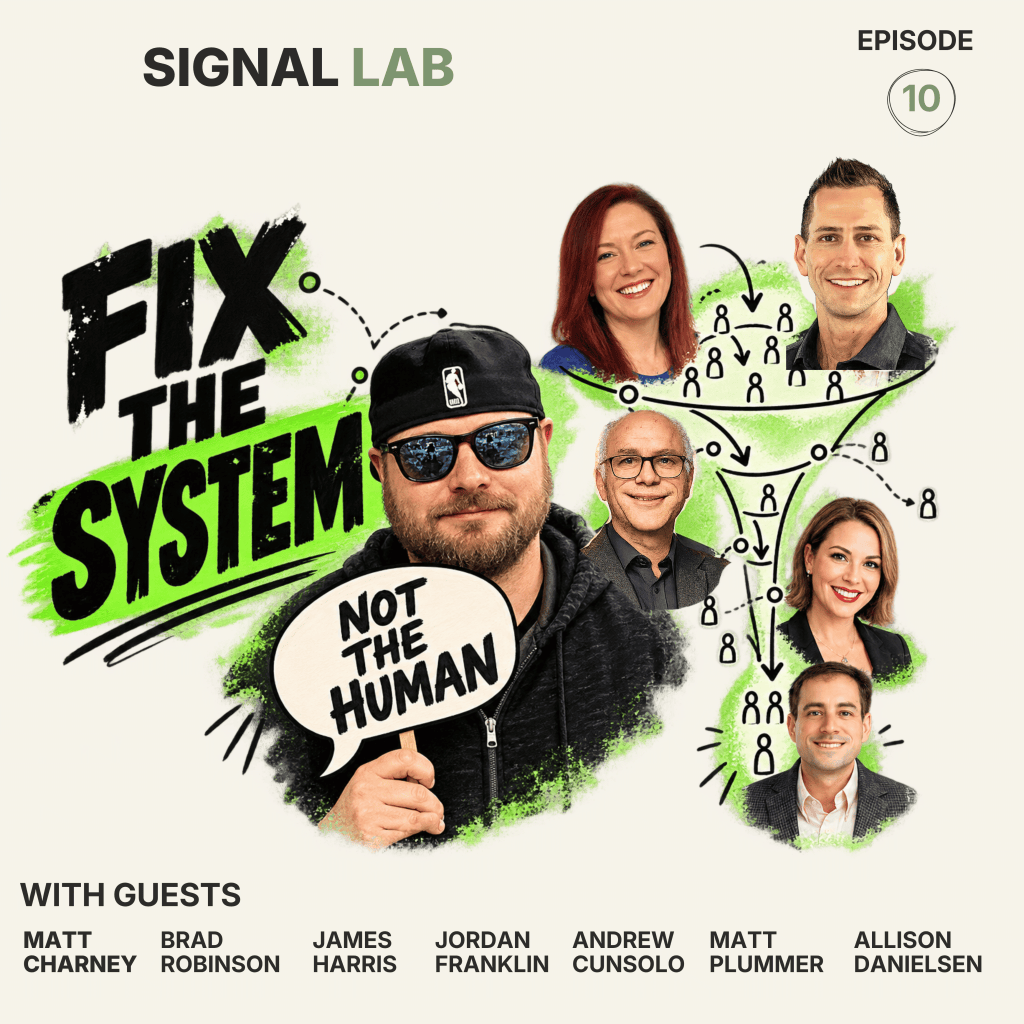
Hiring isn’t one decision made by one person. Follow an applicant through the marketplaces, technologies, recruiters, and hiring managers that determine who gets seen—and discover what better hiring systems must do differently.
Our Latest Episode

I went looking for signals. I found a decision system.

I began this investigation with a question: What information actually changes an employer’s hiring decision?

But there is no single hiring decision.

A marketplace decides which opportunities someone sees. A person decides whether to apply. An applicant tracking system organizes and surfaces applications. A recruiter decides who deserves human attention. A hiring manager decides who they can imagine doing the work.

Each decision is made by someone—or something—different. Each uses different information. And a person can be eliminated long before reaching the human most capable of recognizing their value.

Episode 10 brings together what we learned across the entire investigation—and why designing better hiring systems requires starting with decisions, not data.

What This Investigation Revealed

  • Why hiring is a sequence of decisions rather than one employer decision
  • How scarce human attention is allocated throughout the hiring process
  • Why qualified people disappear before a hiring manager can evaluate them
  • What resumes, job postings, and existing systems consistently fail to capture
  • Why better data only matters if it reaches the right decision at the right moment
  • How technology can support better human judgment instead of replacing it

Built from Conversations Across Hiring

The investigation follows hiring from the final human decision backward through recruiting, applicant tracking systems, job distribution, and talent marketplaces.

Featuring insights from Brad Robinson, Christy Lamers, James Harris, Jordan Franklin, Andrew Cunsolo, Matt Plummer, Allison Danielsen, and Matt Charney.

All Episodes

When Work Goes Fractional – with Matthew Mottola & Tony Buffum – The Signal Lab

What happens when the systems we use to connect people to jobs no longer reflect how the work gets done?Employers are finding expertise through freelance, fractional, and contract arrangements that don’t fit neatly into a conventional job posting. Workers are building careers across projects and clients. Thousands of specialized marketplaces help connect them—but finding the right destination creates another challenge for everyone involved.Human Cloud co-founders Matthew Mottola and Tony Buffum join Ian Davidson to explore what employers’ use of flexible talent reveals about how work is changing. Drawing on their experiences at Microsoft, Stanley Black & Decker, and Upwork, they explain why companies adopted these approaches and what still makes employers hesitate.The conversation turns on a different starting question: “What does success look like?” When employers begin with an outcome rather than a job description, they have to think more specifically about the capabilities needed to deliver it. Ian asks whether that experience offers a preview of how more organizations may design their teams as AI changes the work.Ian closes by examining why adding more marketplaces doesn’t necessarily create a stronger workforce system. Whether the opportunity is a permanent position or a six-week contract, employers need better ways to describe the capabilities required, and workers need profiles that carry evidence of what they can do across systems.This is the third episode in Act 3, “This Is Not a System,” our continuing investigation into why the workforce system does not function like a system. Next, Army Special Forces veteran Steve Geib and his wife, Sytease, help us examine what happens when individuals must connect the pieces themselves.EPISODE CHAPTERS00:00 – When full-time jobs aren’t the whole picture 03:00 – How Tony and Matt found a shared mission 04:00 – Microsoft’s freelance experiment 06:00 – Why traditional hiring wasn’t fast enough 08:00 – Employer adoption and thousands of specialized marketplaces 11:00 – Decision fatigue and our fictional sponsor, FullTimeJobs.com 12:00 – How AI changes the way employers organize work 16:00 – Starting with “What does success look like?” 18:00 – How evidence builds trust 19:00 – What replaces familiar resume signals? 21:00 – Looking beneath the credential 23:00 – Talent marketplaces as a form of certification 24:00 – Portable profiles and inconsistent data 26:00 – Can workers take their reputation with them? 28:00 – Credentials, accomplishments, and evidence that travels 30:00 – What state marketplaces miss by designing only for full-time work 32:00 – Feedback loops and evidence beyond claims 34:00 – Building shared infrastructure as work changes Explore Human Cloud: https://humancloud.com/Explore Signal Mapping: https://signollabs.com/blog-signal-mapping/Learn about Signol Labs: https://signollabs.com/Working to connect human capability with opportunity? Contact Ian at ian@signollabs.com or https://signollabs.com/contact-us/.Subscribe to The Signal Lab and share this conversation with someone building your region’s workforce.
  1. When Work Goes Fractional – with Matthew Mottola & Tony Buffum
  2. Who Builds The Workforce? – with Paul Fain
  3. How To See Where Work Is Going – with Julia Lane
  4. Fix The System: The Conclusion of Our Employer Research
  5. Missing Context – With Allison Danielsen

About the Host

Ian Davidson is the founder of Signol Labs and a long-time workforce technology leader. His work focuses on helping education, workforce, and employer systems better understand human capability through improved signals, standards, and infrastructure.

Through The Signal Lab, Ian explores the intersection of learning, work, technology, and opportunity with the practitioners building the future.

Join the Conversation

Have a perspective on skills, hiring, workforce technology, credentials, AI, or the future of opportunity?

I’d love to hear from you.

Whether you’re an employer, educator, policymaker, technologist, researcher, or workforce practitioner, The Signal Lab exists to connect ideas across communities that don’t talk to each other often enough.

Contact Signol Labs to suggest a guest, propose a topic, or continue the conversation.

The Signal Lab Podcast

The Signal Lab explores how learning, work, identity, and technology are reshaping the way we understand human potential.

Through conversations with educators, employers, technologists, policymakers, and learners, we examine the signals that connect people to opportunity—and the systems that interpret them.

Each episode builds on the last, creating a connected exploration of the infrastructure of opportunity.